Paddling the Pocomoke: The Darkest River You’ll Ever Love
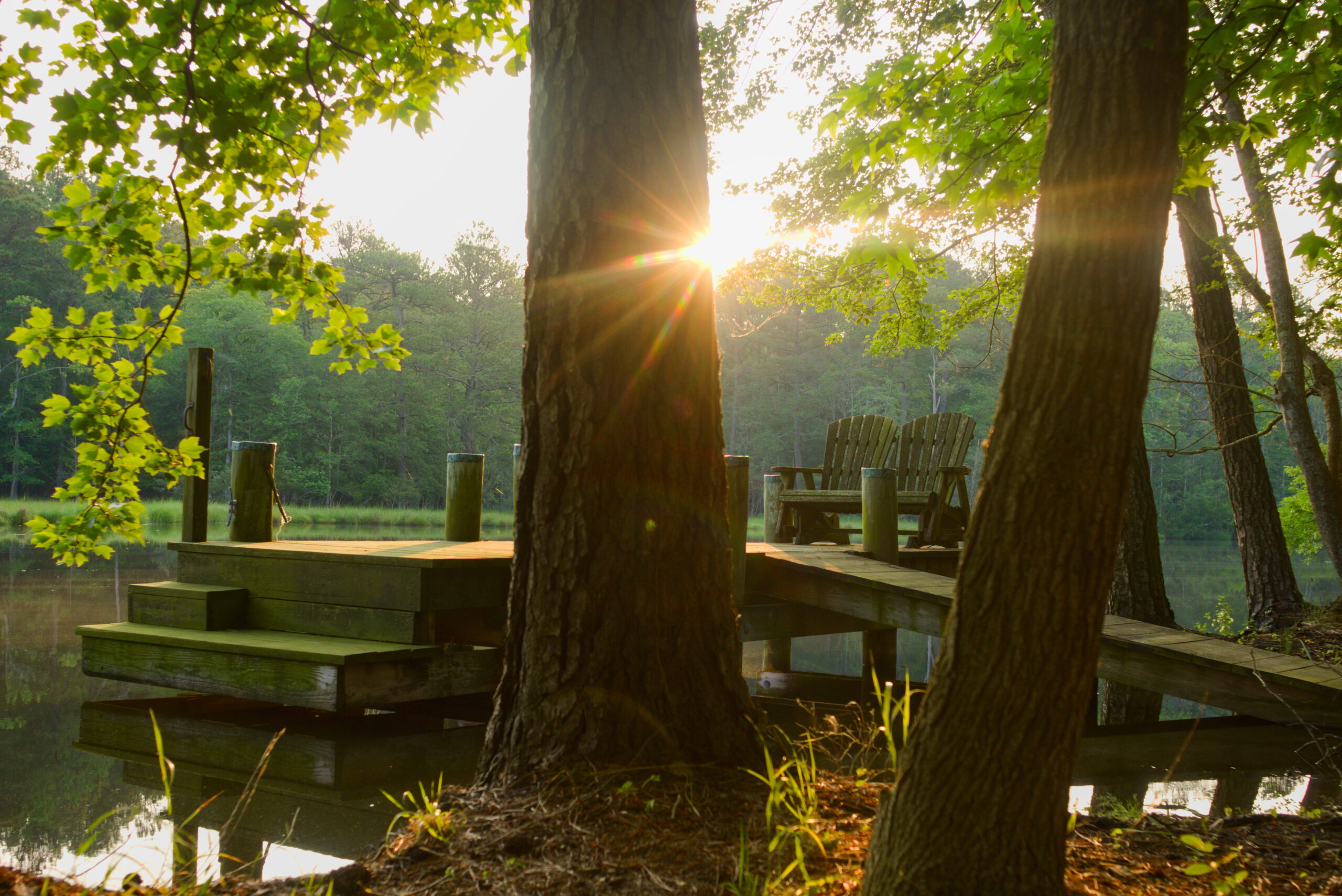
I’ve kayaked a lot of waterways on the Eastern Shore, but nothing quite prepares you for your first look at the Pocomoke River. It’s black. Not murky, not brown, but genuinely, deeply black, like tea steeped for a thousand years. That color comes from tannins leaching out of the cypress roots along the banks, and once you know that, it stops being unsettling and starts being beautiful.
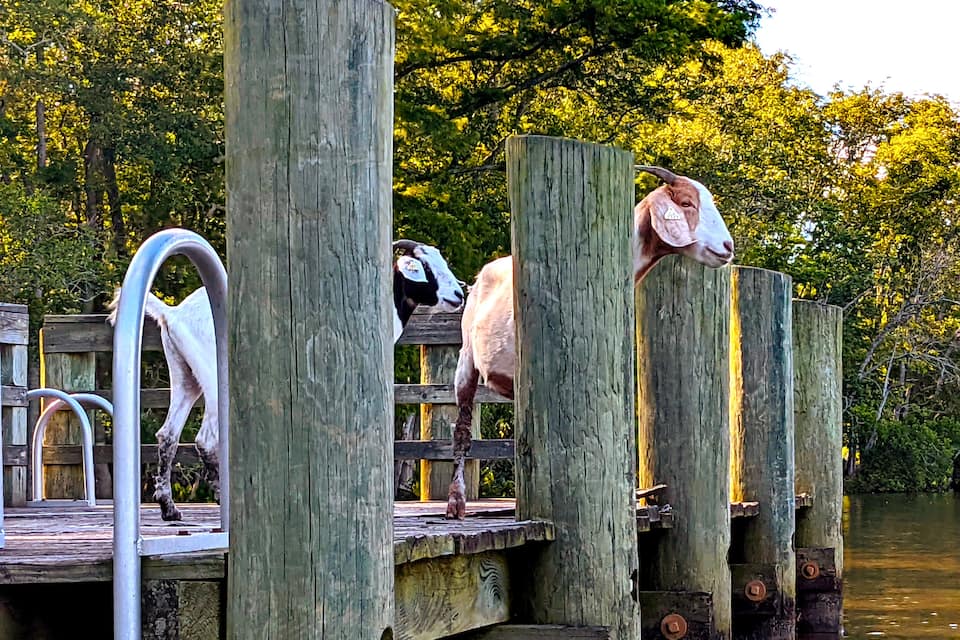
Semi-wild goats along the Pocomoke River at Goat Island in Snow Hill, MD.
The Pocomoke runs through one of the northernmost bald cypress swamps on the East Coast, and paddling through it feels like you’ve wandered into a different century. The trees rise straight out of the water, their knobby knees poking up around the hull of your kayak, Spanish moss hanging overhead in certain spots. It’s quiet in a way that’s hard to describe, not silent exactly, but layered. Frogs, red-winged blackbirds, the occasional great blue heron lifting off just ahead of you.
I always put in at Milburn Landing in Pocomoke State Forest. It’s a low-key launch with enough parking, and it drops you right into the good stuff without a long paddle through open water first. From there you can head upstream toward the narrower, shadier sections where the canopy closes in and it genuinely feels like you’re paddling through a tunnel of green.
Spring is when I like it most. The cypress hasn’t leafed out fully yet, so the light comes through in long shafts, and the water is still cold and clear-ish. You’ll see osprey hunting and occasionally a river otter if you’re quiet and lucky. Summer is beautiful too but bring bug spray — real bug spray — and go early in the morning before the heat settles in.
One thing people don’t always realize: the Pocomoke is tidal in its lower stretches, so pay attention to which direction the current is running when you put in. I’ve had friends who paddled easily downstream for an hour and then turned around into a stiff incoming tide and a headwind. It adds character to the story later, but it’s not fun in the moment.
You don’t need to be an experienced paddler to enjoy this river. The water is calm, there’s almost no boat traffic in the upper sections, and even a few miles out and back gives you a genuine sense of the place. Pocomoke River Canoe Company in Snow Hill rents kayaks and canoes and can point you toward the right stretch for your ability level. Snow Hill itself is worth the stop, it’s one of those small Eastern Shore towns that hasn’t been polished into a postcard, and I mean that as a compliment.
The Pocomoke is one of those places I’ve taken people to dozens of times and it still surprises me. Last fall I rounded a bend and flushed a pair of wood ducks out of a cypress hollow and just sat there in the middle of the black water watching them go. Some mornings on the Eastern Shore, that’s enough.
The name “Pocomoke” (originally Pough-Koke-Mo-Ke) comes from the Algonquin language, meaning “pierced or broken ground” or “black water.”
- The Color: The river’s famous ink-black color isn’t from mud; it’s caused by tannic acid leaching from the roots of the Bald Cypress trees that line the banks.
- The Depth: Because it is a narrow, slow-moving coastal river, it creates a “flume” effect that scours the bottom, making it exceptionally deep—reaching over 45 feet in some narrow bends.
- The River as a Highway: The river served as the main artery for a network of indigenous villages. They used the massive cypress trees to carve “dugout” canoes, some large enough to carry dozens of people for trade across the Chesapeake Bay.
- Strategic Stronghold: The dense, swampy terrain provided a natural defense, making the Pocomoke one of the most powerful and influential tribes on the Eastern Shore until the mid-1600s.
- Early Exploration: Captain John Smith mapped the river’s mouth in 1608. By the mid-1600s, it became a site of tension between the Maryland and Virginia colonies.
- The First Naval Battle: In 1635, the river was the site of the first recorded naval battle in North American colonial waters. It was a dispute over trading rights between William Claiborne (Virginia) and Lord Baltimore’s men (Maryland).
- Tobacco & Timber: During the 1700s, the river became a vital shipping lane for “Hogsheads” of tobacco and massive quantities of timber used for shipbuilding in Baltimore and Philadelphia.
- Shipbuilding: The rot-resistant cypress and cedar wood were highly prized. Pocomoke City (then called New Town) became a major shipbuilding hub, launching schooners and steamboats directly into the black water.
- The “Cypress Mining”: In a unique historical quirk, “miners” used to pull perfectly preserved, ancient cypress logs out of the river mud and swamp peat. These “mummy logs” were centuries old but still usable for high-quality shingles.
- Pocomoke River State Park: Established to protect the northernmost stands of Bald Cypress on the Atlantic Coast.
- Heritage Today: Today, the river is a designated State Scenic River, popular for “eco-tourism” and kayaking. It remains one of the most untouched-looking waterways in the Mid-Atlantic, appearing much as it did to John Smith 400 years ago.