Assateague Island Wild Horses: The Complete Visitor’s Guide 2026
From someone who lives next door.
There’s a moment that happens to a lot of our guests. They’re 16 miles from home (home being Casa Blue Heron on the water outside Berlin) and they’ve just crossed the Verrazano Bridge onto Assateague Island. They slow the car to look at something in the marsh. And then they realize: that’s not a deer. That’s a horse. A completely wild horse, standing in the grass, completely unbothered by the car or the camera or the stunned silence inside it.
That’s the thing about being this close to Assateague. The island is genuinely just down the road. But seeing the horses well and finding them reliably, staying safe, understanding what you’re actually looking at takes a little know-how. This guide covers everything: the horses’ history, where to find them, when to go, how to stay safe, and the one annual event that draws tens of thousands of people to this stretch of coastline every July.
The Basics: What Are the Assateague Wild Horses, Exactly?
First, a clarification that surprises most visitors: these animals are technically horses, not ponies. They’re called ponies partly because of their compact, stocky build, a result of centuries of adapting to life on a barrier island, where the diet of salt marsh grasses and freshwater pond water isn’t exactly lush. Their bodies have learned to retain water efficiently, which gives them a slightly rounded appearance. But genetically, they’re horses.
They’re also technically feral, not truly wild. The most likely origin story, supported by historical research, is that colonial-era farmers grazed their livestock on the island to avoid paying mainland taxes. Over generations, those domestic horses became self-sufficient. Local lore favors a more dramatic explanation, a Spanish shipwreck in the late 1700s, and while it makes for a better story, historians lean toward the tax-dodging farmers.
There are two separate herds, divided by a fence at the Maryland/Virginia state line:
- The Maryland Herd: Approximately 78 horses, managed by the National Park Service. These are the horses you’ll encounter on the National Seashore side. The NPS uses a contraceptive darting program to keep the population at a sustainable size.
- The Virginia Herd: Approximately 150 horses, owned by the Chincoteague Volunteer Fire Department. They live on the Virginia end of the island (technically still Assateague Island, despite what the name “Chincoteague ponies” suggests). This is the herd involved in the annual Pony Swim.
The two herds don’t mix. They’ve been separated for decades.
Where to See the Horses on the Maryland Side
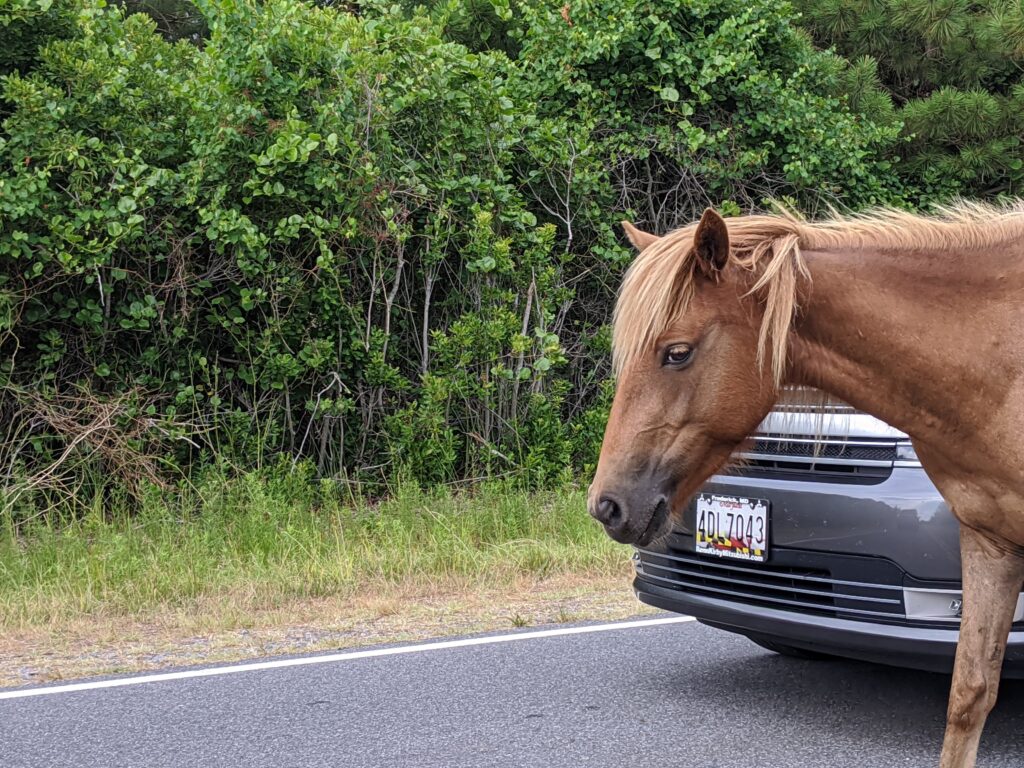
The Maryland section is generally the better place for up-close, natural encounters. Horses here roam the entire island freely: along the road, on the beach, in the campgrounds, grazing in the marsh. You don’t need to hike for miles or book a tour. On most visits, you’ll see them within minutes of crossing the bridge.
The entrance is via Route 611 from Berlin, Maryland, about 8 miles south of Ocean City. You’ll cross the Verrazano Bridge onto the island. The visitor center is on the mainland side just before the bridge (open daily 9am–4pm, closed Thanksgiving and Christmas). Stop here if it’s your first visit, the rangers give excellent orientation and the maps are genuinely useful.
The $25 vehicle pass (valid for 7 consecutive days) covers both the Maryland National Seashore and the Chincoteague National Wildlife Refuge in Virginia. If you visit multiple times during a stay, the $45 annual pass pays for itself quickly. America the Beautiful (National Park) passes are also accepted. (We get the National Park pass each year.)
Once you’re on the island, the horses are almost everywhere. A few specific areas where sightings are especially reliable:
- Along Bayberry Drive (the main road into the park): horses graze along both sides of the road frequently. Pull over safely. Don’t stop in travel lanes and watch from your car or a few feet away.
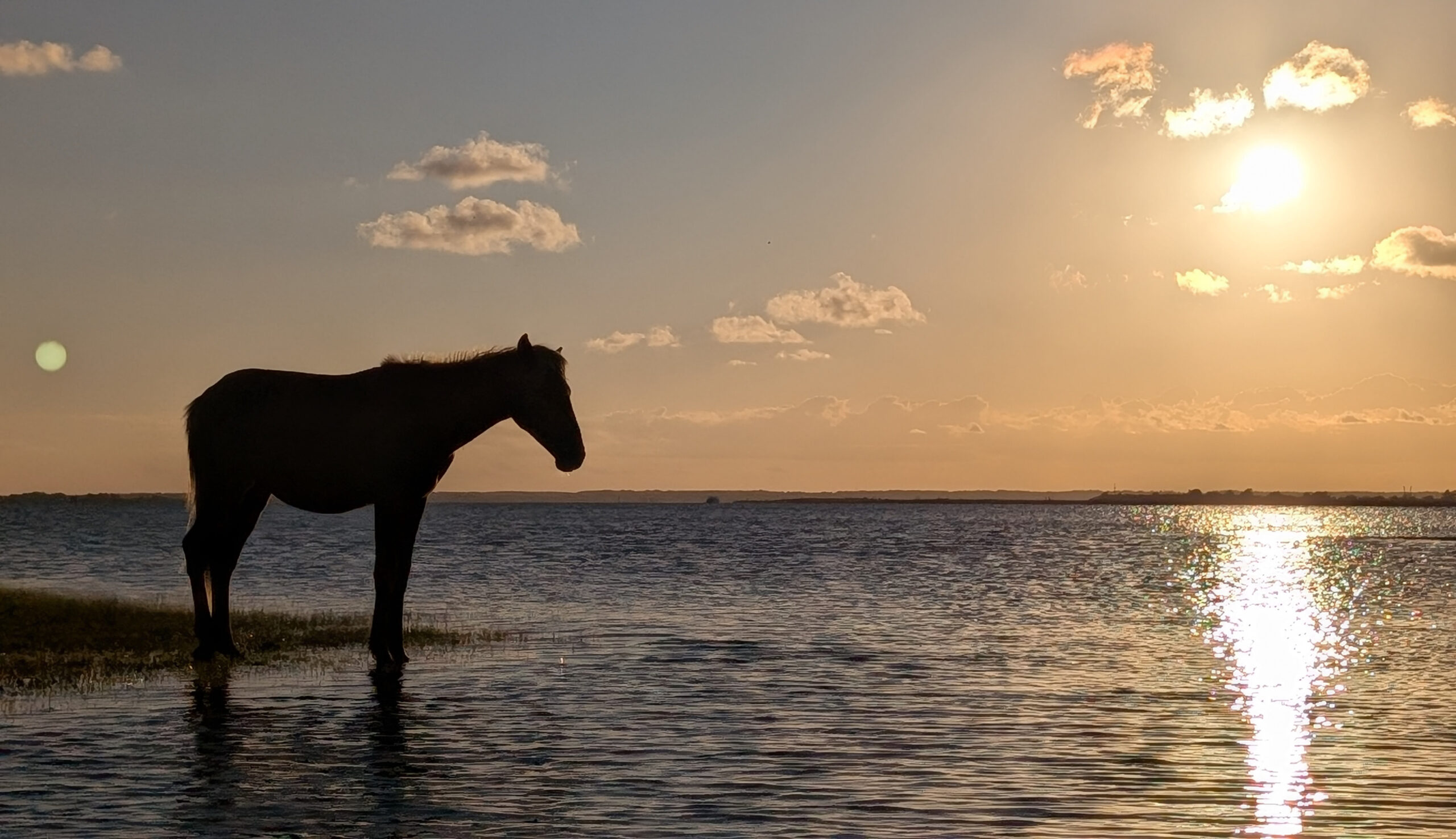
- The beach: Horses come down to the ocean regularly, especially in warmer months. Seeing a band of horses walking along the surf line with their manes in the wind is one of those experiences that photographs don’t fully capture.
- The campgrounds: Campers regularly wake up to horses investigating their site. This is one reason the NPS is strict about food storage rules.
- The nature trails: The Life of the Dune and Life of the Marsh trails are short, boardwalk-style loops where horses are often spotted in the vegetation.
Casa Blue Heron is 16 miles from the Route 611 entrance, about a 20-minute drive depending on summer traffic. Most guests make the trip multiple times during their stay.
When to Go: Timing Your Visit
The horses are present year-round, but the experience varies significantly by season.
Early morning and late evening are the best times, regardless of season. Horses are more active during cooler parts of the day, more visible (they tend to graze in open areas rather than retreat to shade), and the light is better for photography. If you can be at the park by 7–8am or return around 6–7pm, you’ll have the best odds of extended sightings and fewer crowds.
By season:
Spring (April–June): Foals are born in spring, usually from April through June. Seeing a newborn foal with its band is extraordinary. Crowds are lighter than summer, the weather is mild, and the island feels unhurried. Water is still cool for swimming, but for horse viewing, spring may be the single best season.
Summer (July–August): Peak season in every sense. Horses are out, the beach is busy, and the energy is high. July 29, 2026 is the Chincoteague Pony Swim (see below). Horses on the Maryland side aren’t directly involved, but the whole area buzzes with visitors during pony week. If you’re visiting in summer, arrive at the park early to beat the heat and the crowds. Bug spray is essential on the trails from July onward.
Fall (September–October): A genuinely underrated time to visit. Crowds drop sharply after Labor Day while the water is still warm enough to swim into September. Crabbing peaks in August and September. The horses are easier to spot as vegetation thins out, and the fall light on the marsh is beautiful. October through mid-November is prime surf fishing season, and the OSV (over-sand vehicle) beaches are popular with anglers.
Winter (November–March): The island is quiet and the horses are highly visible. Bare trees and marsh mean nothing blocks your view. The isolation of the beach in winter has its own appeal. Most facilities have limited hours, some restaurants are closed, and camping season is reduced, but for pure wildlife watching, winter visits are memorable.
Safety: The Rules That Actually Matter
The horses at Assateague are not tame. They are not interested in posing for photos. They bite, they kick, and they can carry rabies. Every year, visitors are injured because they got too close, and the horses sometimes have to be euthanized as a result of incidents involving human contact. Please take these rules seriously:
Stay at least 40 feet away, roughly the length of a school bus. This applies at all times, in all directions. Don’t approach from behind. If a horse approaches you, back away until you’ve restored safe distance. Do not let children run toward them or touch them, even if the horse seems calm.
Never feed the horses. This seems obvious, but it’s the most common mistake. A horse that learns to associate humans with food becomes aggressive and has to be removed from the herd. Feeding a wild horse at Assateague carries a $100 fine.
Secure your food. On the beach or at the campgrounds, food must be stored in a zippered, latched hard-sided cooler. The horses will investigate unsecured food. They are strong, clever, and utterly unbothered about knocking over everything you brought for lunch. Even a nylon cooler bag is not sufficient. Trust me, they’ve figured those out.
Drive slowly. Horses cross the road constantly and the island’s horses’ eyes don’t reflect light the way deer eyes do making them harder to see at dusk and night. The speed limit is low; obey it.
Assateague vs. Chincoteague: Which Side is Better?
This is the question every first-time visitor researches beforehand, and the honest answer is: they offer different experiences, and the Maryland side wins for up-close natural encounters.
On the Maryland side (Assateague National Seashore), the horses are simply everywhere. They roam freely through the campgrounds, along the road, onto the beach. You can park your car and watch a band of horses graze 50 feet away in their natural habitat. That kind of access is hard to find anywhere else.
The Virginia side (Chincoteague National Wildlife Refuge) is a true wildlife refuge, but the horses there tend to be more elusive. The popular way to see them from Chincoteague is via narrated boat tour from the marina, which means you’re watching from the water at some distance. It’s a lovely experience, but it’s different from walking up to a parking area and seeing horses right there.
The one exception: the annual Pony Swim in late July, when the Virginia herd swims across the Assateague Channel to Chincoteague Island. That event is spectacular and unique. (We’re almost there!)
You cannot drive between the two sections. The Maryland and Virginia ends of the island are separated by a fence at the state line, and there’s no through road. To go from one to the other, you drive back to the mainland and around, about 56 miles and roughly an hour.
Practical note: A single $25 vehicle pass covers both sections. If you want to do both in one trip, plan your day accordingly.
The Chincoteague Pony Swim: What to Know for 2026
The 2026 Pony Swim is July 29. The 101st annual event, which makes it a milestone year. Expect it to be one of the largest crowds in the event’s history, though I don’t expect it to surge past last year’s attendance.
Here’s how it works: Starting the Saturday before the swim (July 25), the Chincoteague Volunteer Fire Department’s “Saltwater Cowboys” round up the Virginia herd from the southern and northern sections of Assateague Island. The South Herd roundup is accessible to the public! Park in the Woodland Trail parking lot and watch the ponies be herded into the South Corral. The North Herd roundup begins Sunday morning and requires a 3-mile hike or 2-mile bike ride plus a 1-mile hike to reach the North Corral.
Wednesday, July 29: At slack tide (timing varies by year, check chincoteague.com for the 2026 schedule), the Saltwater Cowboys drive the entire herd into the Assateague Channel. The ponies swim across to Chincoteague Island and come ashore at Veterans Memorial Park on Pony Swim Lane. Tens of thousands of spectators line the shore and fill charter boats in the channel.
Thursday, July 30: The foal auction at the Chincoteague Carnival Grounds. Some foals are sold to raise funds for the fire department and herd management. Others are “buybacks” which are auctioned and then donated back to the herd to live wild on the island.
Friday, July 31: The swim back to Assateague. This is the local’s recommendation: fewer crowds, better viewing positions, and the same spectacular sight of the herd crossing the channel. If you can only see one swim, see Friday’s.
The week also includes the Chincoteague Fireman’s Carnival (rides, games, food, nightly from Monday through Saturday), and the movie Misty of Chincoteague plays at the Island Theatre throughout the week.

By the way, I attended both the swim and swim back events during the 100th anniversary. Veterans Memorial Park was packed for the pony swim and it was hard to see or get a picture of anything. (Get there super early if you want a chance to see anything.) The horses eventually made their way to the the Chincoteague Fireman’s Carnival. A small parade on Main Street was part of the spectacle. This part of the event was a little more kid-friendly, but still packed.
The horses ended up at the carnival grounds and that’s a good chance to see the horses up close and experience a little of the behind-the-scenes action surrounding the auction. Fan favorite horse, Riptide, was there separated from most of the other male horses because he tends to fight. (He didn’t get walked across the parade route because of his general demeaner.)
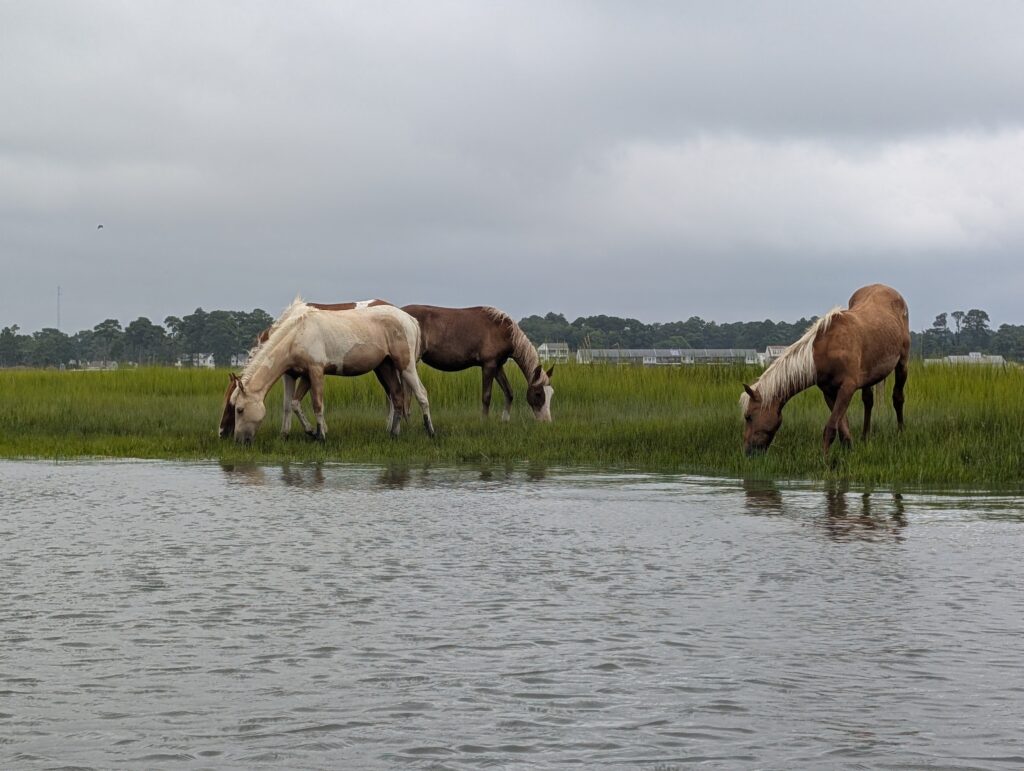
Again, the swim back was a much better experience. I watched it from my kayak this time. I still had to arrive extra early and plan where to launch from. Normally, you can launch a boat from Veteran’s Memorial Park, but that wasn’t an option during the pony swim week for the 100th anniversary. Also, locals were charging extra to launch from their properties and several roads were closed. Nonetheless, I got my boat launched and waited in the water. The kayak experience was worth it. I was close enough to get pics of the swim. After the swim, the horses were relased onto Assateague Island and they didn’t run away, they just got back to their normal business of foraging. It was a great opportunity to snap pics of them readjusting to their normal lives.
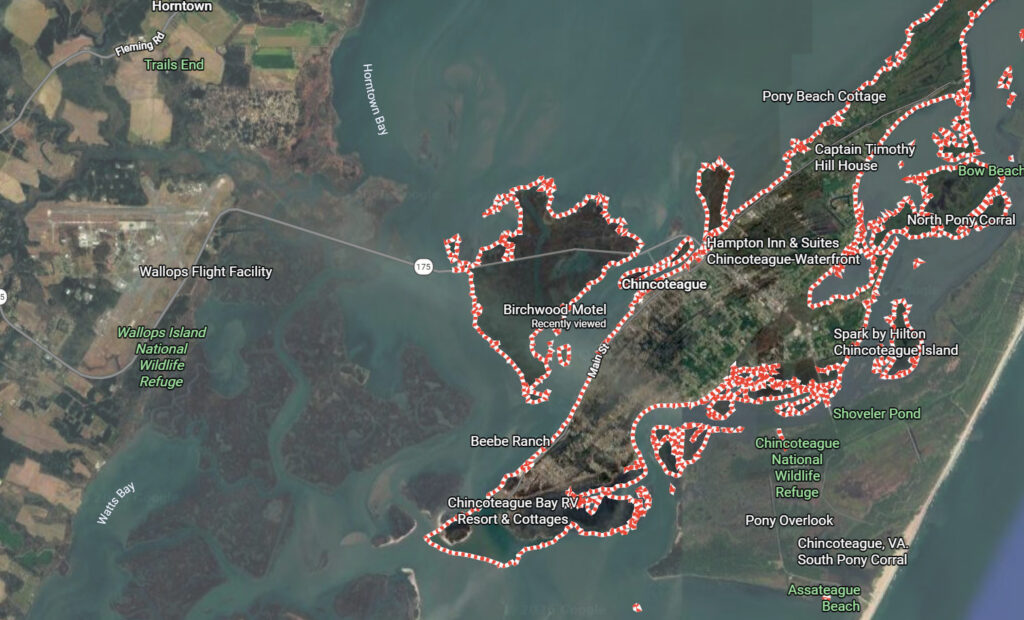
Planning advice: Accommodation in Chincoteague books out a year in advance for pony week. If you want to attend and stay nearby without the chaos of Chincoteague itself during peak week, Casa Blue Heron is 39.5 miles from Chincoteague, about 45 minute, making it close enough for a comfortable day trip to the swim and the carnival, while far enough to come home to peace and quiet in the evenings. However, beware that parking is a challenge during the big event. Also, Chincoteague Road (route 175) is the only way in or out of the island (at least by car). Usually, it isn’t a chokepoint, but things can change during the big week. Arriving early is a must and you’ll need to have a plan about where to park.
Beyond the Horses: What Else is on the Island
The horses draw people to Assateague, but the island has a lot more going for it:
Crabbing: Old Ferry Landing on the Maryland side is the prime spot. Bring a hand line, chicken necks for bait, a long-handled dip net, and a cooler. The NPS also runs ranger-led crabbing and clamming programs which are great for kids and first-timers. Blue crabs peak in August and September.
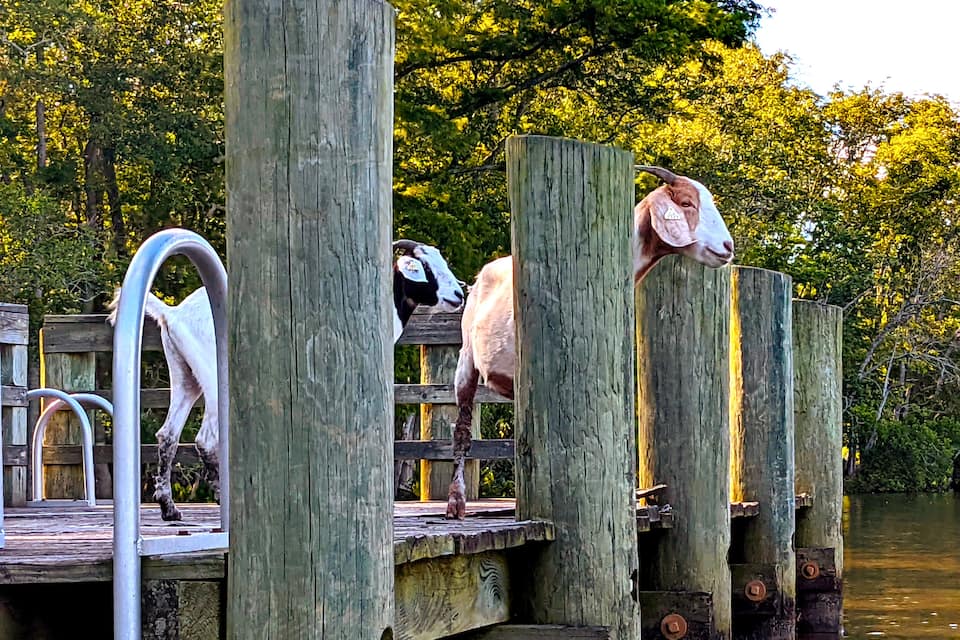
Kayaking: The back bays on the bayside of the island offer protected, flat-water paddling through marsh and estuary. Wildlife sightings are frequent. You’ll paddle past horses grazing at the water’s edge, sika deer, great blue herons, egrets, and if you’re lucky, dolphins. Kayak rentals are available from Assateague Island Outfitters at the bayside rental stand during high season. Casa Blue Heron guests also have access to kayaks at the property for paddling Marshall Creek into Chincoteague Bay, a beautiful paddle in its own right, with excellent wildlife along the creek banks.
Surf fishing: A long tradition on the island. OSV (over-sand vehicle) permits allow anglers to drive on designated beach sections and set up for striped bass, bluefish, flounder, and more. Peak season runs fall through early spring.
Birding: Exceptional. The island sits on the Atlantic Flyway and the diversity of species (egrets, herons, brown pelicans, ospreys, bald eagles, migrating shorebirds) is remarkable. Fall migration is particularly impressive.
By the way at the house for a few years now, we’ve had the honor of having egrets roost in a tree next to the dock. I’ve seen as many as 40 great egrets rest there before making the flight south for the winter. You’ll see these birds roosting more often in Assategue itself, but to see our feathered friends feel comfortable enough to vist with us yearly is truly special and probably deserves its own blog entry.
Swimming: The ocean beach is beautiful and lifeguarded Memorial Day through Labor Day. It gets busy on summer weekends; early mornings are the best time for an uncrowded swim. Dolphins are regularly spotted just beyond the breakers.
Practical Details
Address and entrance: 7206 National Seashore Lane, Berlin, MD 21811. Enter via Route 611 south from Berlin or from Route 50 in Ocean City.
Fees: $25/vehicle (7-day pass), $20/motorcycle, $15/person on foot or bicycle. Annual pass: $45. America the Beautiful national parks pass accepted. Senior passes ($20/year or $80 lifetime) and Access Passes (free, for permanent disabilities) also accepted.
Visitor Center: Open daily 9am–4pm, closed Thanksgiving and Christmas. Stop here on your first visit.
Pets: Allowed in most of the Maryland section on a 6-foot leash. They are not allowed on lifeguard-protected beach, nature trails, or backcountry campsites. They are also NOT allowed anywhere in the Virginia section, including in your vehicle.
Insects: Mosquitoes and biting flies (greenheads) can be severe on the trails from June through September, especially in still, humid conditions. DEET-based repellent is genuinely necessary, not optional, on the marsh trails during summer.
Phone: 410-641-1441
One Last Thing
The horses on Assateague have lived wild on this island for centuries. They’ve outlasted empires, storms, and generations of human visitors. The rules around them exist because they work. The animals stay somewhat wild. The herd stays healthy. And visitors keep having the kind of encounters that make them want to come back.
Casa Blue Heron sits 16 miles from the entrance to Assateague Island National Seashore. Most of our guests visit multiple times during their stay. Some go every morning. A few have told us they never make it to Ocean City at all.
We think that’s probably the right call.
Have questions about visiting Assateague from Casa Blue Heron? Contact us directly — we’re happy to share what we know.
Ready to plan your stay? Book direct at casablueheron.com